Complete UK Guide
Boxing Betting UK: Fight Odds, Markets and Wagering Analysis
 Available in US
- UK Boxing Betting Markets: Essential Wagering Metrics
- Understanding Boxing Odds in the UK
- Boxing Betting Markets Explained
- Choosing a Boxing Bookmaker in the UK
- Live Boxing Betting: Wagering During the Fight
- Boxing Betting Strategy: Core Principles
- UK Boxing Betting Regulations: What Changed in 2025-2026
- Responsible Boxing Betting
- Betting on Major UK Boxing Events
- Boxing Betting Questions Answered
- Your Next Steps in Boxing Betting
Where Statistics Meet the Sweet Science
By PUNCHLINE Boxing Betting Analyst
I still remember the night I placed my first serious boxing bet. Not a tenner on the favourite to win, but a calculated stake on Anthony Joshua to stop Wladimir Klitschko in rounds seven through nine. The eleventh-round knockout vindicated my analysis of Klitschko’s fading stamina patterns, even if my exact round prediction missed. That single wager taught me something the betting sites never explain: boxing rewards those who study the sport, not those who follow the hype.
The UK betting market now generates £16.8 billion in gross gambling yield annually, and a meaningful slice of that comes from boxing. Unlike football or horse racing where variables multiply endlessly, boxing distils competition to its purest form: two athletes, one ring, and a finite number of outcomes. That simplicity is deceptive. Within it lies remarkable complexity – fighter styles, historical patterns, weight-cutting impacts, corner tactics, and the psychological warfare that begins months before the opening bell.
Nine years of analysing fights and tracking my own betting record have convinced me that boxing offers something no other sport can: genuine opportunities to find value that the casual market overlooks. When 10% of the UK population bets on sport online, the majority follow headlines rather than punch statistics. They see a knockout artist and assume the stoppage is inevitable; they forget that style matchups create outcomes, not records.
This guide exists because I grew tired of the surface-level advice plastered across betting sites – the same recycled tips about “doing your research” and “managing your bankroll” that tell you nothing practical. Instead, I want to share the framework I have built over nearly a decade: how to read odds properly, which markets genuinely offer edge, how regulatory changes in 2025 and 2026 affect your options, and where to place your stakes without getting shortchanged. Whether you placed your first boxing bet last month or you have been following the sport since Lennox Lewis was still active, I aim to sharpen how you approach this fascinating corner of the betting world.
UK Boxing Betting Markets: Essential Wagering Metrics
- Fractional odds remain the UK standard – a 4/1 underdog implies a 20% win probability, but bookmaker margins mean true value requires odds above what the math suggests.
- Method of victory and round betting markets consistently offer better value than simple fight winner bets, provided you understand how fighter styles interact.
- The 2026 Remote Gaming Duty increase to 40% will squeeze operator margins, potentially affecting promotional offers and odds quality across UK bookmakers.
- Live betting opens between rounds, not during action, and odds shift dramatically after knockdowns or momentum swings – preparation before the fight determines whether you capitalise or chase.
- Responsible gambling tools are now legally mandated, with financial vulnerability checks active since February 2025 – using deposit limits and reality checks protects your bankroll and your enjoyment of the sport.
Understanding Boxing Odds in the UK
A mate once asked me why he should bother learning odds formats when the bookmaker shows potential returns automatically. I told him about the time I spotted a 6/1 shot that should have been closer to 4/1 based on my analysis. The bookmaker’s interface showed £70 returns on a £10 stake. Useful. But understanding that 6/1 implied only a 14.3% chance when I rated the fighter at closer to 20% – that was the insight worth having. The profit came from knowing the gap, not just the payout.
Fractional Odds: The UK Standard
Fractional odds dominate British betting for historical reasons, and they remain the default format on most UK platforms. The notation works simply: the first number represents potential profit relative to the stake shown as the second number. Odds of 5/2 mean a £2 stake returns £5 profit plus your original £2 back. The favourite in a fight typically shows odds below evens – something like 4/9 – where you risk £9 to win £4.
Implied probability – the percentage chance of an outcome that the odds represent, calculated by dividing the stake by the total potential return and multiplying by 100.
The critical skill is converting those fractions into implied probability. This tells you what chance the bookmaker assigns to each outcome. For fractional odds, divide the denominator by the sum of numerator and denominator, then multiply by 100. So 3/1 becomes 1 ÷ (3+1) = 0.25, or 25%. A fighter at 1/4 calculates as 4 ÷ (1+4) = 0.80, or 80%. Once you think in probabilities rather than potential payouts, you start comparing your own assessments against the market.
Converting to Decimal and Back
Decimal odds simplify calculation at the cost of British tradition. To convert fractional to decimal, divide the numerator by the denominator and add 1. Those 5/2 odds become (5÷2) + 1 = 3.50 in decimal format. Multiply your stake by the decimal number for total returns including your stake. A £10 bet at 3.50 returns £35.
Odds Conversion Reference
| Fractional | Decimal | Implied Probability |
|---|---|---|
| 1/5 | 1.20 | 83.3% |
| 1/2 | 1.50 | 66.7% |
| Evens (1/1) | 2.00 | 50.0% |
| 2/1 | 3.00 | 33.3% |
| 5/1 | 6.00 | 16.7% |
| 10/1 | 11.00 | 9.1% |

A Practical Worked Example
Suppose a heavyweight bout prices Fighter A at 4/6 and Fighter B at 11/8. These numbers tell you the story before any research begins.
Breaking Down the Odds
Fighter A at 4/6: Implied probability = 6 ÷ (4+6) × 100 = 60%
Fighter B at 11/8: Implied probability = 8 ÷ (11+8) × 100 = 42.1%
Combined implied probability: 60% + 42.1% = 102.1%
The extra 2.1% represents the bookmaker’s margin – their built-in edge regardless of outcome.
That margin matters. If you calculate Fighter B’s true chance at 45% based on your analysis, but the market implies only 42.1%, you have found potential value. The bookmaker’s probability leaves room for a positive expected outcome if your assessment proves accurate over time. For deeper exploration of identifying these edges, the complete guide to boxing odds breaks down margin calculation across different market types.
Why Draws Trade at 33/1
New bettors often glance at draw odds around 33/1 and dismiss them entirely. Historically, draws in professional boxing occur in roughly 2-3% of bouts – the 33/1 price implies about 2.9% probability, which aligns reasonably with historical data. But context changes everything. Fights between evenly matched technical boxers who lack knockout power see draws more frequently. Championship bouts with cautious gameplans can drift into controversial split decisions where one scorecard goes the other way. At 33/1, you need to be right only once in thirty-four attempts to break even. If your read on a specific matchup suggests closer to 5% draw probability, those odds become interesting rather than ignorable.
Overround – the combined implied probability of all outcomes in a market, exceeding 100% to create the bookmaker’s profit margin.
Boxing Betting Markets Explained
The first time I looked beyond simple fight winner bets, I found a market on whether a cruiserweight clash would produce at least one knockdown. Both fighters had respectable power but solid chins. The market priced “no knockdown” at generous odds. That bet won comfortably, and I realised I had been ignoring half the sport. With more than 85 titles across 17 weight divisions sanctioned by the four major governing bodies, boxing generates betting markets that capture every conceivable aspect of a fight.
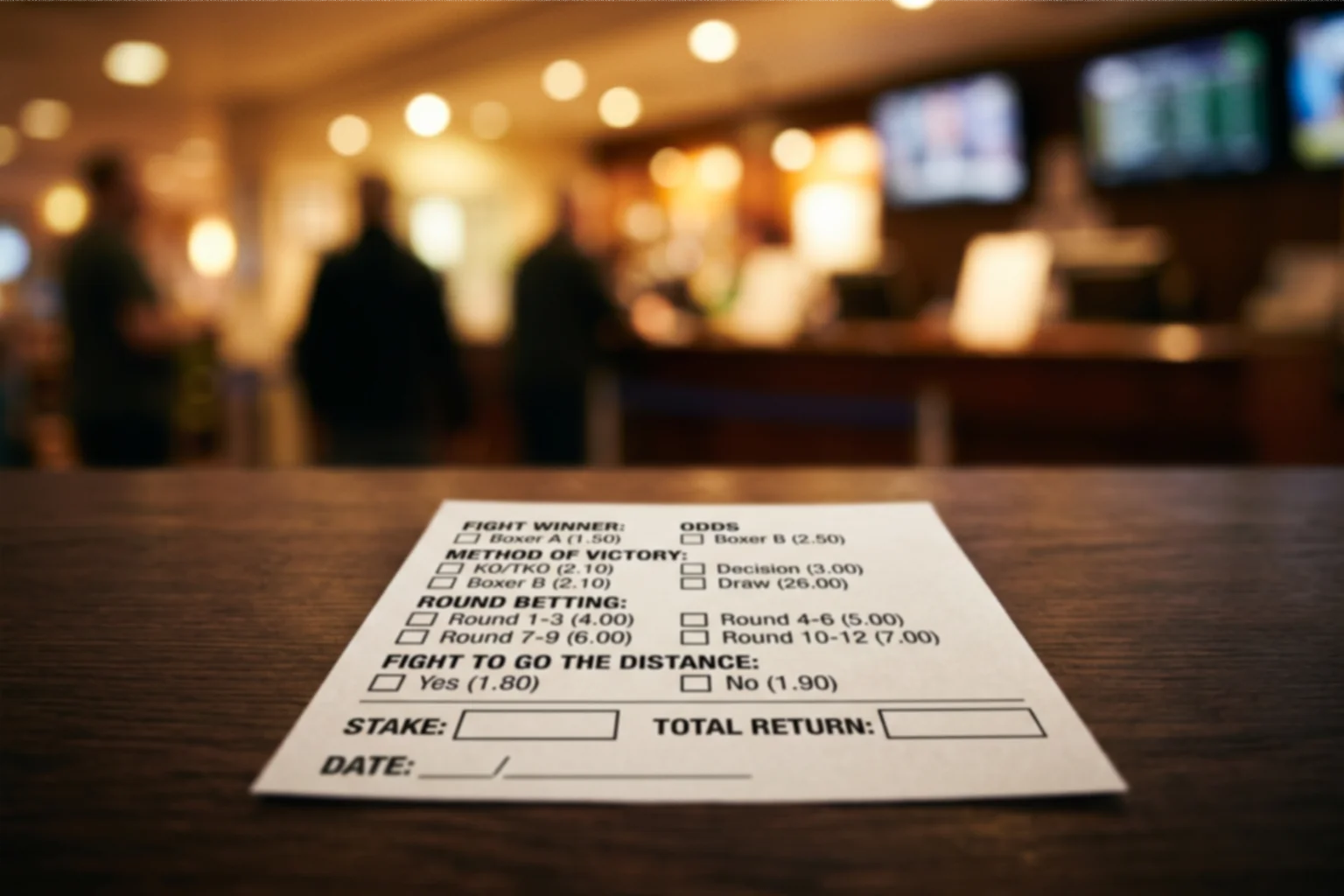
Fight Winner
The straightforward moneyline bet on which fighter wins the bout. Includes draw as a potential outcome on three-way markets.
Method of Victory
Betting on how the fight ends: knockout, technical knockout, disqualification, or decision for either fighter.
Round Betting
Predicting the exact round or grouped rounds in which the fight concludes. Higher risk, higher reward.
Over/Under Rounds
Wagering on whether the fight lasts longer or shorter than a specified round threshold.
To Go the Distance
A simpler version of totals betting: will the fight reach the final bell without stoppage?
Knockdown Props
Specialty markets on whether knockdowns occur, how many, or which fighter records them.
Fight Winner and Moneyline
The moneyline market remains the entry point for most boxing bettors. You pick a winner, and the odds reflect the perceived gap between fighters. Two-way markets force a choice between the two boxers, with stake refunds if the fight draws. Three-way markets include the draw as a distinct betting option, typically at significantly longer odds. Most UK bookmakers default to three-way pricing for professional bouts.
When a two-way market refunds on draws, the odds tend to be slightly shorter than three-way equivalents because the bookmaker must account for that refund liability.
Moneyline betting suits those who have strong conviction about a result but less certainty about how it arrives. If you believe a boxer wins regardless of method, the moneyline captures that view without forcing predictions about stoppages or distances.
Method of Victory
This market splits outcomes by how the fight ends, not just who wins. Typical options include: Fighter A by knockout or technical knockout, Fighter A by decision, Fighter B by knockout or technical knockout, Fighter B by decision, plus sometimes the draw. More granular markets separate knockout from TKO or disqualification.
Method of victory betting rewards stylistic analysis. A boxer known for accumulating points rather than finishing fights might be the favourite, but “by decision” odds could offer value if the market underprices that specific route. The method of victory guide explores how to assess stoppage likelihood based on historical patterns and opponent durability.
Round Betting
Exact round betting asks you to predict the specific round in which the fight ends. With 12 possible rounds in a championship fight plus the decision outcome, the market fragments into many selections, each at longer odds. Grouped round betting clusters rounds into sets – typically rounds 1-3, 4-6, 7-9, 10-12 – for better odds per selection while retaining some predictive specificity.
Grouped rounds – a betting market where consecutive rounds are combined into a single selection, offering lower odds than exact round bets but higher probability of success.
I rarely bet exact rounds unless the price justifies long-shot stakes. Grouped rounds allow me to express views like “this fight ends early or goes late, but not in the middle rounds” by backing rounds 1-3 and 10-12 simultaneously. For strategies on timing your round selections, the round betting breakdown covers late stoppage patterns and fatigue analysis.
Over/Under Rounds
Totals betting sets a line – often at 9.5 rounds for a 12-round fight – and you bet on whether the fight lasts longer or shorter. A fight ending in round 9 or earlier pays “under”; anything from round 10 onwards, including the full distance, pays “over”. The half-round convention eliminates pushes on the exact threshold.
This market strips away winner considerations entirely. Two power punchers might see low round totals regardless of who lands the decisive blow. Conversely, two slick defensive technicians push totals high. When the outcome feels unpredictable but the fight duration seems clear, over/under provides a cleaner betting angle.
Specialty Markets: Knockdowns and Punch Stats
Bookmakers increasingly offer proposition bets on specific fight events. Will there be a knockdown? Will Fighter A score a knockdown? Will the fight see three or more knockdowns? Some platforms incorporate CompuBox-style punch statistics for major events, enabling bets on total punches landed or accuracy thresholds.
These markets demand careful evaluation of historical knockdown rates. A fighter might have power but face an opponent with exceptional balance and recovery ability. Conversely, a technically superior boxer might avoid knockdowns altogether against heavy-handed opponents through footwork and ring generalship. Prop markets often carry wider margins because fewer bettors participate, but occasional mispricings emerge when bookmakers rely on surface-level statistics.
Knockdown props differ from knockout bets. A fighter can score multiple knockdowns without finishing the fight, or record a single knockdown that leads to a stoppage. Evaluate these markets independently based on power, chin durability, and referee tendencies.
Choosing a Boxing Bookmaker in the UK
Years ago, I maintained accounts with a dozen bookmakers. Now I actively use four. The reduction came from realising that boxing markets differ substantially between operators – not just in odds, but in depth, availability, and how they treat winning customers. One bookmaker offered the best prices on heavyweight fights but barely covered anything below welterweight. Another had deep markets for undercard bouts but slower payouts than competitors. Knowing where to bet matters as much as knowing what to bet.
What Actually Matters: Selection Criteria
The Gambling Commission currently licenses 2,262 operators in Great Britain. That number sounds overwhelming until you apply filters. For boxing-specific betting, four criteria separate useful bookmakers from those worth ignoring.
Licensing comes first, non-negotiably. Any legitimate UK bookmaker displays their Gambling Commission licence number prominently. The regulator maintains a public register where you can verify any operator. Unlicensed platforms operating from overseas jurisdictions offer no consumer protections and no recourse if disputes arise. I do not care how attractive the odds look – without a UK licence, the bookmaker does not exist for my purposes.
Odds quality requires comparison across multiple fights before committing. A bookmaker might price one card generously and another poorly depending on their liability and trading decisions. I check at least three upcoming cards before judging whether an operator consistently offers competitive prices or trails the market.
Market depth separates boxing specialists from generalists. Can you bet on undercard fighters? Are method of victory markets available for non-title bouts? Do they offer proposition bets beyond basic knockdown yes/no? Some operators publish 30+ markets for a major title fight but only moneyline for everything else. Your betting style determines how much depth you need.
Payout speed and reliability matter when you win. Most UK bookmakers settle boxing bets within minutes of the official result. Withdrawals to debit cards typically process within one to three business days. Some operators consistently beat those timelines; others cite “security checks” that extend delays without explanation. Track record matters.
| Criterion | Why It Matters | What to Check |
|---|---|---|
| UKGC Licence | Legal protection and dispute resolution | Footer of website, Gambling Commission register |
| Odds Competitiveness | Direct impact on long-term profitability | Compare three upcoming cards across operators |
| Market Depth | Access to method, round, and prop bets | Browse undercard markets for mid-tier events |
| Payout Speed | Liquidity and trust | User reviews, personal small-withdrawal tests |
| Account Longevity | Ability to continue betting after wins | Reputation for stake restrictions on winners |
The industry shift toward online betting continues accelerating. High street bookmaker premises have declined by 22.8% since before the pandemic, reflecting how digital platforms now dominate. That shift concentrates competition online, which benefits bettors through better odds and promotions – but also means your choice of operator carries more weight than when alternatives sat on every corner.
A Practical Approach to Bookmaker Selection
Before Opening a New Account
- Verify the UKGC licence number on the Gambling Commission website
- Check boxing market availability for a current mid-level card
- Compare moneyline odds against two established competitors
- Read the terms of any welcome offer for wagering requirements
- Search for user experiences regarding payout delays
- Confirm deposit and withdrawal methods suit your preferences
I recommend maintaining accounts with at least three operators. This allows odds comparison without friction and ensures you always have options if one bookmaker restricts your stakes or lacks markets for a particular fight. The detailed bookmaker breakdown evaluates current operators by boxing-specific factors if you want a more granular comparison.
Live Boxing Betting: Wagering During the Fight
The first time I placed an in-play boxing bet, I got it completely wrong. A heavy favourite had been dropped in round three, and I rushed to back the underdog at suddenly attractive odds. The favourite recovered, adjusted, and dominated the rest of the fight. That expensive lesson taught me something critical: live betting rewards preparation, not reaction. The odds movement after a knockdown already prices in the new information. Profiting from in-play requires anticipating what happens next, not responding to what just happened.
How Live Boxing Markets Work
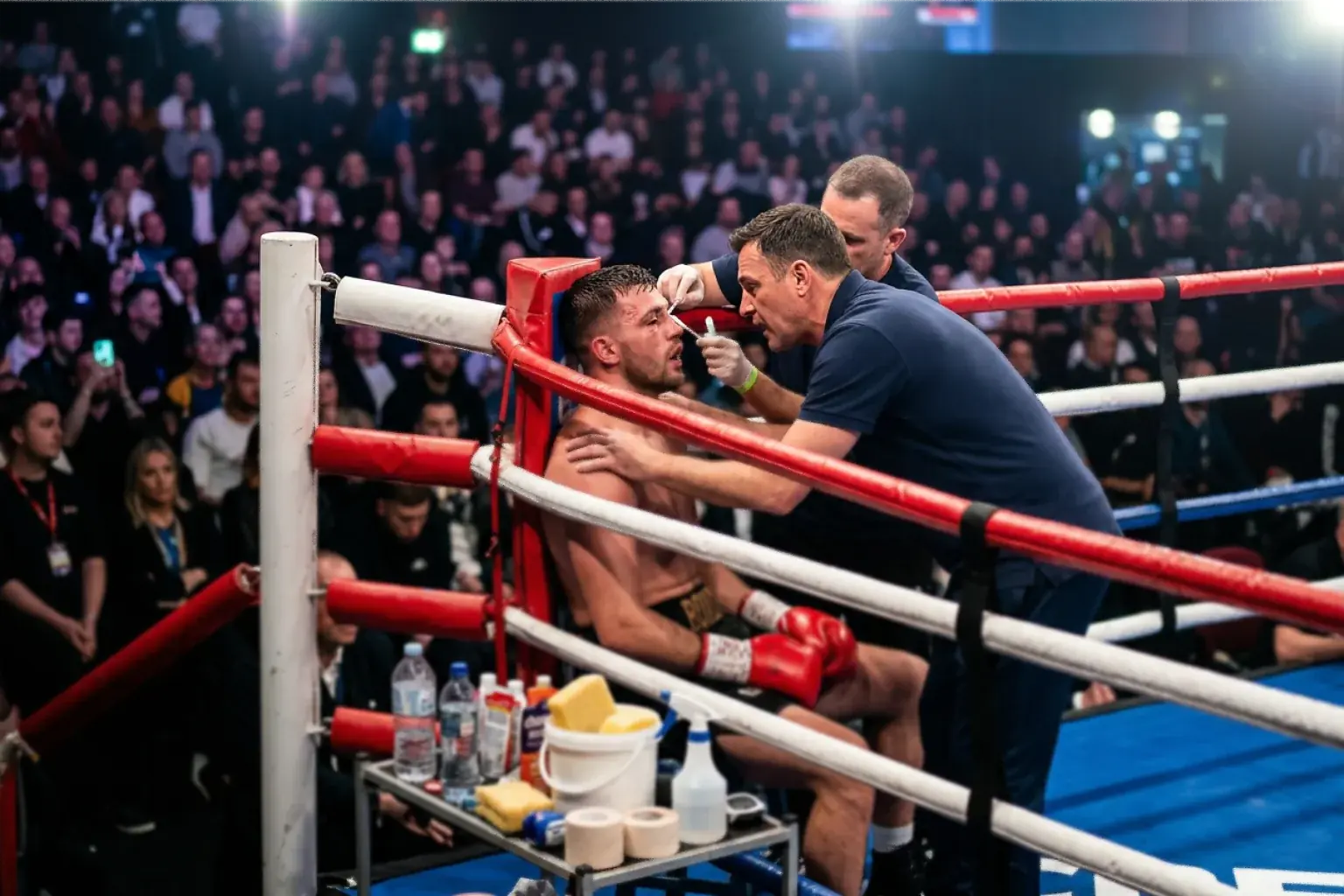
Unlike football or tennis, boxing in-play markets operate in discrete windows. Bookmakers suspend betting during rounds and reopen between bells. That 60-second interval sees odds recalculate based on what just occurred – dominant rounds, momentum shifts, visible damage, knockdowns. You have roughly a minute to assess and execute before the next round begins.
UK operators handle 290 million online bets monthly across all sports, and live betting accounts for a growing share of that volume. Boxing’s round structure creates natural breaks that bookmakers can price accurately, unlike continuous-play sports where suspension judgments become subjective. This structured format means live boxing odds tend to reflect genuine probability shifts rather than algorithmic guesswork.
In-play markets typically narrow during a fight. Pre-fight, you might see moneyline, method, round betting, and props. Once the bout begins, most operators offer only moneyline and possibly total rounds. The reduced selection focuses liquidity but limits strategic options.
Available Live Markets
The standard in-play boxing market is updated moneyline odds. If Fighter A dominates rounds one through four, their odds shorten while Fighter B drifts. Some bookmakers offer live round betting on remaining rounds, though selections obviously diminish as the fight progresses. “Fight to go the distance” or totals markets sometimes remain available, adjusting as rounds pass without stoppage.
Specialty in-play markets are rare. Knockdown props typically close once the fight begins, as do most method of victory bets. The practical reality is that live boxing betting centres almost entirely on adjusted moneyline prices. Your edge comes from reading the fight better than the bookmaker’s traders, not from finding exotic live market opportunities.
Watch First, Bet Later
If you plan to bet in-play, watch the first two rounds without placing stakes. Assess how the fighters look relative to expectations. Early rounds reveal cardio, timing, chin durability, and whether either boxer looks uncomfortable with range or style. This observation informs whether the live odds accurately reflect what you are witnessing.
The Strategic Consideration
Live betting in boxing carries inherent disadvantages for bettors. The bookmaker’s traders watch the same fight you watch, often with more screens, better angles, and historical data overlays. They react to events as quickly as you do – sometimes faster, given institutional infrastructure. The window between rounds compresses decision time, encouraging impulsive rather than analytical choices.
Where opportunities exist, they come from interpretive differences. A flash knockdown might spook the market more than warranted if the fighter rose quickly and showed no distress. A dominant round on the scorecards might mask the fact that the loser landed cleaner power shots. If your fight-reading skills exceed the average market participant’s, you can capitalise on these gaps. If they do not, live betting simply adds volatility to your results without improving expectation.
For detailed in-play strategies including round-by-round tactics and momentum reading, the live boxing betting guide covers approaches I have tested across dozens of fights.
Boxing Betting Strategy: Core Principles
I track every boxing bet I place – not just outcomes, but reasoning, odds taken, and whether the logic proved sound even when the bet lost. After reviewing three years of records, one pattern emerged starkly: my profitable bets came almost entirely from stylistic analysis, not from picking winners I “felt good about”. The fights where I could articulate why Fighter A’s approach would neutralise Fighter B’s strengths returned better than fights where I simply liked the better boxer.
Stylistic Analysis: The Foundation
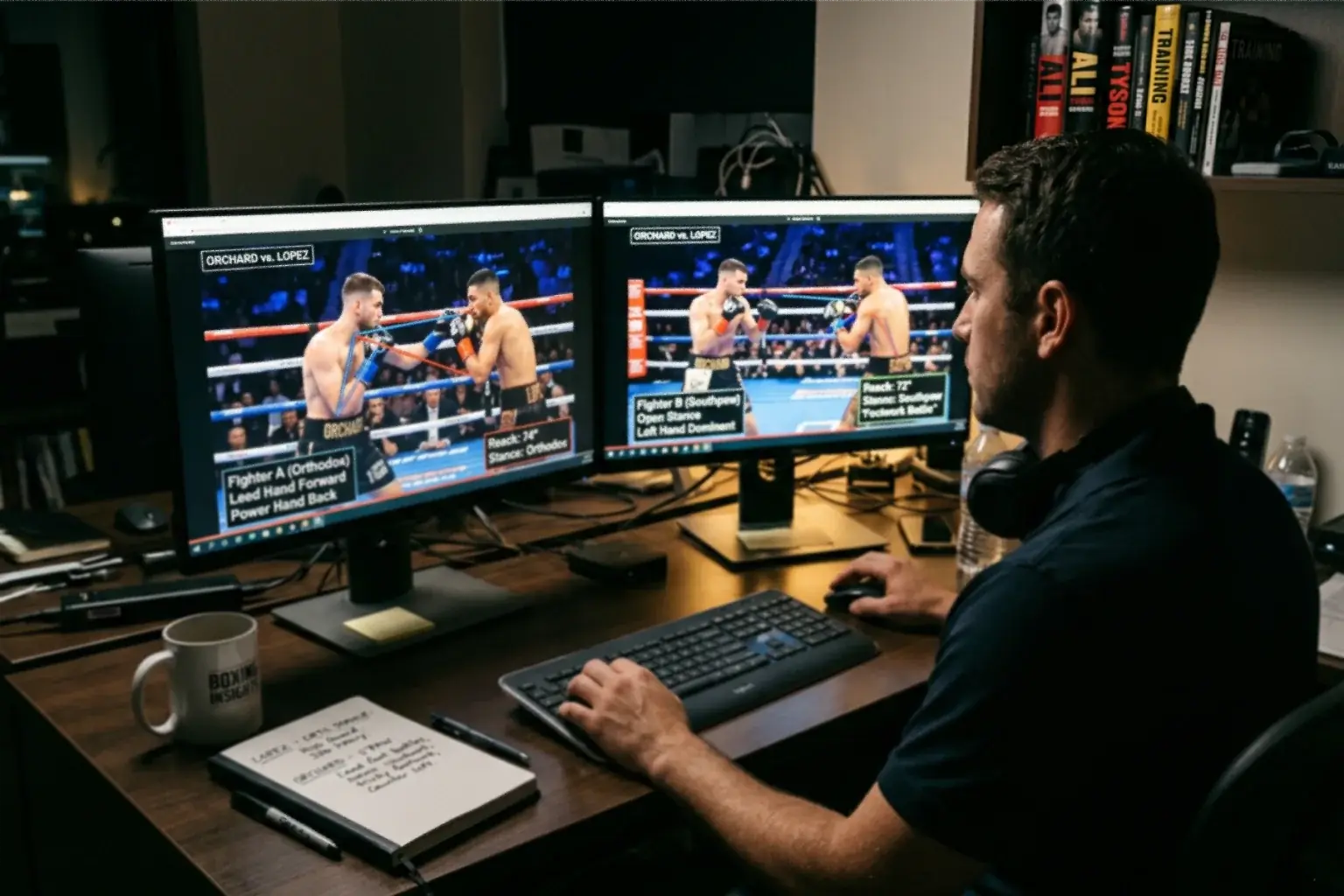
Boxing styles interact in predictable ways, and those interactions matter more than records or rankings. A pressure fighter with relentless volume typically struggles against a sharp counter-puncher with good feet. A tall, rangy boxer who controls distance can frustrate smaller opponents who need to get inside. These patterns hold true more often than upset-hungry narratives suggest.
The analytical question is not “who is the better boxer?” but “whose style imposes itself in this matchup?” A boxer with a 25-1 record might have built that record against opponents whose styles played into their strengths. Put them against someone who negates their primary weapon, and the record means little.
Winning percentage tells you about past opponents. Style matchup analysis tells you about the specific fight you intend to bet on. The market prices the former; your edge comes from the latter.
Finding Value in Boxing Markets
Value exists when the odds imply lower probability than your analysis suggests. If you calculate Fighter B has a 35% chance of winning but the odds imply only 25%, that gap represents potential value. Note the word “potential” – your calculation must be more accurate than the market’s for value to be real rather than imagined.
Where does genuine edge come from? Specificity. The market aggregates casual bettors backing names they recognise, and bookmakers shade odds toward popular fighters because liability management requires it. When you know that Fighter A has never faced a southpaw with genuine power, and Fighter B fits exactly that profile, you hold information the casual market underweights.
Value Calculation in Practice
Fighter A: Odds of 1/3 imply 75% probability
Fighter B: Odds of 9/4 imply 30.8% probability
Draw: Odds of 25/1 imply 3.8% probability
Total implied probability: 109.6% (9.6% bookmaker margin)
Your analysis: Fighter B’s style historically troubles counter-punchers like Fighter A. You estimate Fighter B’s true probability at 38%.
The gap between 38% and 30.8% suggests value on Fighter B at current odds.
Knockout percentages provide useful shortcuts for method of victory betting. Among active champions, Gervonta Davis leads with a 90.3% knockout rate, followed closely by Naoya Inoue at 90%. Fighters with KO rates above 85% finish opponents consistently regardless of context. Those with rates below 50% rarely end fights early except against dramatically inferior competition. Historical patterns anchor expectations before stylistic adjustments.
Bankroll Management Essentials
The strategic clarity of your analysis becomes irrelevant if you bet irresponsibly. Every successful bettor I know, without exception, operates with defined stakes relative to their total bankroll. The specific percentage varies by risk tolerance, but the principle does not: no single bet should represent so much that losing it affects your ability to continue betting rationally.
I allocate stakes based on confidence levels. Bets where I see significant edge receive larger stakes; speculative positions where I like the price but feel uncertain receive minimum stakes. No single bet ever exceeds 5% of my bankroll, and most fall between 1-3%. This approach survives losing runs without requiring deposits or emotional recovery periods.
The strategy deep dive expands on these principles with specific frameworks for fighter style categorisation and value identification across different market types.
UK Boxing Betting Regulations: What Changed in 2025-2026
When I started betting on boxing, the regulatory environment was stable enough to ignore. You signed up, deposited, bet, withdrew – the rules operated invisibly. That era ended. The past eighteen months delivered more substantive regulatory change than the previous decade, and understanding these shifts matters for anyone betting seriously. The rules now affect your experience directly, from how quickly you can deposit to what happens when you win consistently.
Remote Gaming Duty: The Tax Increase
The headline change arrives on 1 April 2026, when Remote Gaming Duty rises from 21% to 40%. This tax applies to operators, not bettors directly, but the downstream effects will reach your betting experience. Operators absorb this increase somehow – through reduced promotional generosity, slightly wider margins, or stricter account management. Expecting bookmakers to maintain pre-April 2026 pricing and bonuses ignores basic economics.
For bettors, this means comparing odds across operators becomes more important, not less. Some bookmakers will pass costs through pricing adjustments; others will cut elsewhere. The competitive dynamics will shake out over months following implementation. Monitoring which operators maintain value and which deteriorate will separate informed bettors from those absorbing hidden costs.
What the Tax Change Means in Practice
If a bookmaker previously offered 3/1 on an underdog, margin pressures from higher taxation might push that same bet to 11/4 or 5/2 without any change in assessed probability. Small odds shifts compound significantly across volume betting.
Financial Vulnerability Checks
Since 28 February 2025, online operators must conduct financial vulnerability checks on customers. These assessments evaluate whether betting activity aligns with apparent affordability. The checks trigger at deposit thresholds, during certain loss periods, and when betting patterns suggest potential harm.
In practice, this means some bettors face verification requests they have never encountered before. Documentation proving income or source of funds may be required to continue betting at previous stake levels. The Gambling Commission frames these measures as protective, and the intent is reasonable – preventing vulnerable individuals from gambling beyond their means. For bettors with straightforward financial situations, compliance proves minor inconvenience at most.
Financial checks apply across operators. If you spread your betting across multiple bookmakers specifically to avoid triggering thresholds at any single site, regulators consider this pattern suspicious. The system is designed to track total gambling behaviour, not just individual operator relationships.
The Statutory Gambling Levy
A government minister stated during parliamentary debate that authorities “are committed to ensuring that the potential harm that can ensue from gambling is limited, and we are strengthening protections for those at risk.” That commitment materialised in the statutory gambling levy, effective since 6 April 2025. The levy funds £100 million annually for research, education, and treatment of gambling-related harm.
Operators fund this levy through a percentage of revenue, adding another cost pressure alongside the Remote Gaming Duty increase. From the bettor’s perspective, the levy operates invisibly – no line item appears on your account. But the cumulative regulatory burden on operators tightens industry margins, which eventually affects odds, bonuses, and operational decisions.
What This Means for Your Betting
The regulatory direction is clear: tighter consumer protection, higher operator costs, more scrutiny of individual betting behaviour. None of these changes make boxing betting impossible or even significantly more difficult for recreational bettors. They do make casual approaches to account management riskier. Understanding why a bookmaker requests documents, knowing your rights during verification processes, and maintaining records of your gambling activity all become more relevant than before.
For those betting within their means on fights they enjoy, the regulatory environment remains workable. The changes primarily affect those operating at scale, those struggling with gambling control, and operators themselves. If you belong to none of those categories, these updates represent background context rather than active concern.
Responsible Boxing Betting
I have seen it happen more than once. A friend who enjoyed the occasional boxing bet started chasing losses after a bad run. What began as entertainment became compulsion. The thrill of the wager replaced the enjoyment of the sport. By the time he recognised the problem, recovery required professional help and a complete break from betting. His experience is not unusual. It informs everything I write about this topic.
The statistics establish scale. Roughly 0.5% of the UK population meets the clinical definition of problem gambling. That percentage sounds small until you recognise it represents hundreds of thousands of people. The age group 25-34 shows the highest concentration of problem gambling behaviours, coinciding with peak earning years and life pressures that can transform recreational betting into escape behaviour.
Tony Adams, the former England captain who founded Sporting Chance, captured why help matters: when he started the organisation twenty-five years ago, “I knew how difficult it was for a football player to find a safe place to talk about their emotions and thoughts that troubled them.” That observation extends beyond professional athletes. Finding space to address gambling issues requires acknowledging the problem exists, which many struggle to do while actively betting.
Recognising the Warning Signs
If you find yourself betting to recover losses rather than betting on fights you genuinely analyse; if betting becomes something you hide from family; if you feel irritable or anxious when unable to bet; if you have borrowed money specifically for gambling – these patterns warrant honest self-assessment.
Tools That Actually Help
Every UK-licensed bookmaker must offer self-limitation tools. Deposit limits cap how much you can add to your account daily, weekly, or monthly. Loss limits restrict how much you can lose before forced pauses. Reality check notifications interrupt sessions to prompt reflection on time and money spent. These tools work mechanically – they prevent action regardless of in-the-moment impulses.
Self-Protection Options
- Deposit limits that cannot be instantly raised once set
- Session time limits with automatic logout
- Cooling-off periods from 24 hours to 6 weeks
- Self-exclusion through GAMSTOP covering all UK operators
- Reality check notifications at intervals you choose
GAMSTOP provides the most comprehensive intervention. Registering excludes you from all UK-licensed gambling sites for a chosen period – six months, one year, or five years. The exclusion cannot be reversed early. For those who need complete separation from betting environments, GAMSTOP provides it without requiring willpower that addiction compromises.
Support Exists
The National Gambling Helpline operates around the clock. GamCare provides counselling and support services. Sporting Chance, initially focused on professional athletes, now extends resources more broadly. The statutory levy mentioned earlier specifically funds expansion of these treatment options. Help is genuinely available for those who seek it.
I continue betting on boxing because I enjoy the analytical challenge and keep it within boundaries that my life can afford financially and emotionally. That balance is not automatic; it requires conscious maintenance. If maintaining that balance becomes difficult, the responsible response is using the tools available rather than insisting on control you may not possess. Boxing will still be there when and if you return.
Betting on Major UK Boxing Events
Wembley Stadium, April 2017. Anthony Joshua versus Wladimir Klitschko for three heavyweight titles. The atmosphere crackled with something beyond sport – this felt historic, and the betting markets reflected that magnitude. British operators reported approximately £20 million staked on the single bout. I was there, ticket in hand and bet on my phone. When Joshua rose from the canvas in round six to eventually stop Klitschko in the eleventh, the roar blended the crowd’s emotion with my own vindication. Major events carry different stakes, literally and emotionally.
Why Big Fights Change the Market
Volume transforms everything. When a fight attracts mainstream attention beyond the regular boxing betting audience, market dynamics shift. Casual money typically flows toward favourites and knockout outcomes. This recreational bias can create value on underdogs or decision outcomes if you maintain analytical discipline while others bet with their hearts.
Bookmakers respond to volume by tightening margins on headline markets while occasionally mispricing secondary options. The moneyline on a superfight might carry a 4% overround; the grouped round betting on the same card might carry 12%. When attention concentrates on the obvious bet, less popular markets receive less pricing attention.
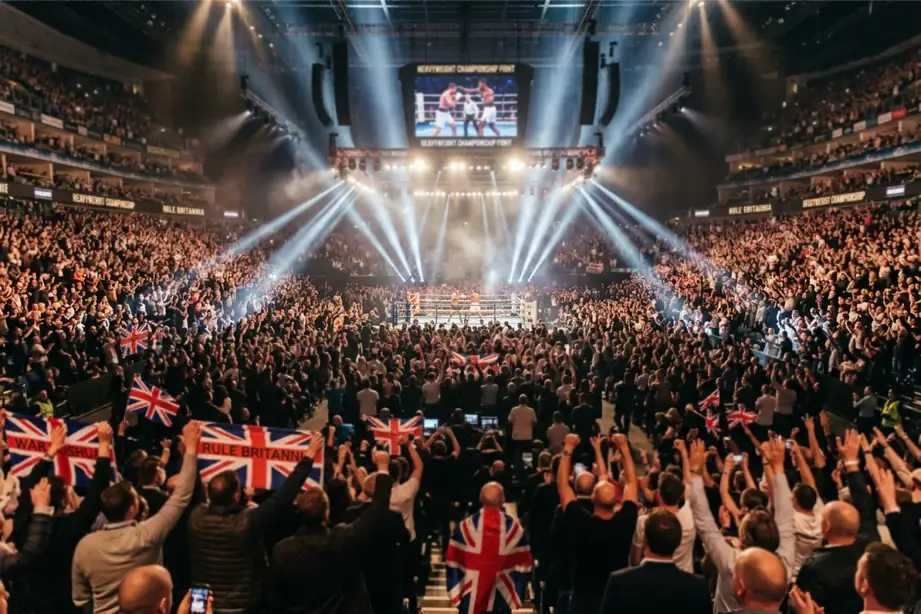
Joshua vs Klitschko 2017
Approximately £20 million staked with UK bookmakers on a single heavyweight bout
Fury vs Joshua Projection
Combined purse anticipated to exceed £200 million for the all-British clash
UK Heavyweight Market
British heavyweights drive disproportionate betting volume relative to other divisions
The All-British Superfight Factor
Tyson Fury versus Anthony Joshua remains the domestic fight everyone wants to see. Both fighters have experienced recent setbacks – Simon Jordan memorably called any future meeting “the battle of the losers in terms of both of them coming off the back of defeats” – yet public appetite persists regardless. The projected purse exceeds £200 million, which alone signals unprecedented commercial interest.
A four percent overround on the moneyline and a twelve percent overround on grouped rounds are not the same bet with different odds. They are different standards of accuracy — and this works out exactly how much sharper your reads have to be in each.
| Market | Overround | Cost per bet | Accuracy needed | Annual cost |
|---|---|---|---|---|
| Two-way moneyline, tight | 2,1 % | −2,06 % | 25,52 % | −£51 |
| Superfight moneyline | 4,0 % | −3,85 % | 26,00 % | −£96 |
| Three-way with draw | 9,6 % | −8,76 % | 27,40 % | −£219 |
| Grouped round betting | 12,0 % | −10,71 % | 28,00 % | −£268 |
| Knockdown and exotic props | 20,0 % | −16,67 % | 30,00 % | −£417 |
The two worked examples elsewhere in this guide sit at opposite ends of that table. The two-way heavyweight market at 4/6 and 11/8 carries a 2,1 percent overround and costs 2,06 percent per bet; the three-way with the draw at 1/3, 9/4 and 25/1 carries 9,6 percent and costs 8,76 — more than four times as much. Same fight, same analysis, four times the drag, purely from which market you choose. That comparison puts a useful tension in the advice above into focus. Method of victory and round markets do receive less casual attention, which is a genuine argument for looking there. But they also carry the widest margins, as the props section here notes. Both statements are true, and they cut against each other: the exotic market gives you softer competition and a steeper toll at the same time. The practical resolution is not to avoid those markets but to hold them to a higher standard. An edge that would be worth backing on a tight moneyline is not worth backing on a twelve percent grouped round market, because roughly seven points of the twelve have to be paid before your read earns anything. Note how the required edge behaves as the selection gets longer. At the same overround, a 25 percent shot needs three points of accuracy while a 10 percent shot needs only 1,2 — in absolute terms. In relative terms both need to be twelve percent better than the truth, which is the harder standard to meet on a long shot where your estimate is least reliable. The overround figures here are illustrative of typical ranges rather than measured for any specific operator; calculate them yourself from the prices on the card in front of you. More in the guides to odds and margin calculation, the market breakdown and value strategy. 18+, UKGC-licensed bookmakers only; BeGambleAware.
For bettors, the Fury-Joshua dynamic illustrates how narrative affects odds. Joshua's name recognition might attract casual support despite form concerns. Fury's unbeaten record (excluding the Usyk losses at cruiserweight-turned-heavyweight) creates historical mystique. The smart approach ignores both narratives and focuses on the stylistic question: how does Fury's height, reach, and movement interact with Joshua's improved boxing under Ben Davison's guidance? The fight will eventually happen, and preparing analytical frameworks now pays dividends when markets open.
Tyson Fury has earned approximately £362.7 million across his career, averaging £147,559 per accurate punch landed according to one statistical analysis. Boxing at the elite level compensates power punches extremely well.
Event-Driven Betting Considerations
Major events attract bookmaker promotions. Enhanced odds, free bet offers, and money-back specials multiply around high-profile cards. These promotions carry terms and conditions that determine actual value – wagering requirements, maximum stakes on enhanced odds, and exclusions that limit practical benefit. Reading terms carefully separates genuine value from marketing theatrics.
The UK boxing calendar delivers several peaks annually: British title fights, European eliminator bouts, and the occasional superfight that transcends regular scheduling. Following the calendar allows preparation – researching fighters weeks before odds appear, establishing price targets, and recognising when opening odds present opportunity versus when waiting serves better.
Boxing Betting Questions Answered
What is the best bet type for boxing?
The moneyline or fight winner market suits most bettors because it requires only picking the victor, not predicting how the fight ends. However, "best" depends on your analytical strengths. If you understand fighter styles and finishing patterns well, method of victory markets often offer better value because they receive less casual attention. Start with moneyline bets while developing deeper analytical skills, then expand to method and round markets as your fight-reading improves.
How do boxing odds work in the UK?
UK bookmakers primarily display fractional odds, where the first number represents potential profit relative to the stake shown as the second number. Odds of 5/1 mean a £1 stake returns £5 profit plus your original pound. To convert to probability, divide the second number by the sum of both numbers, then multiply by 100. So 5/1 implies roughly 16.7% probability. Decimal odds simplify calculation by showing total returns including stake – 5/1 fractional equals 6.00 decimal, meaning a £1 bet returns £6 total.
Can you bet on boxing live?
Yes, most UK bookmakers offer in-play boxing betting with markets opening between rounds. The 60-second interval between rounds allows odds recalculation based on recent action. Available live markets typically narrow to moneyline and possibly round totals, with proposition bets usually closing before the fight begins. Live betting rewards preparation more than reaction – having a gameplan for how you will bet if certain scenarios unfold matters more than impulsive responses to dramatic moments.
What is method of victory betting?
Method of victory betting requires predicting not just who wins, but how they win. Standard options include knockout or technical knockout for either fighter, decision win for either fighter, and sometimes draw. More granular markets separate knockout from TKO or include disqualification outcomes. This market rewards understanding fighting styles – a slick counter-puncher might be favoured overall but "by decision" odds could offer value if the market underestimates how rarely they finish opponents.
Which UK bookmakers are best for boxing?
The best bookmaker depends on what you value. Some operators offer superior odds on heavyweight fights but limited coverage of lower weight classes. Others provide deep markets for undercard bouts with slower payout processing. Rather than picking one "best" operator, maintain accounts with at least three bookmakers to compare odds on each fight and access the best available price. Verify any bookmaker holds a UK Gambling Commission licence before depositing funds.
Is boxing betting profitable?
Boxing betting can produce positive returns over time, but profitability requires genuine analytical skill, disciplined bankroll management, and acceptance that most bettors lose overall. The bookmaker margin ensures they profit on aggregate; individual bettors only overcome that margin through sustained edge in evaluating fights better than the market. Recreational bettors should view potential profits as possible but not expected, treating boxing betting as entertainment with positive outcomes as bonuses rather than income sources.
What does over/under mean in boxing?
Over/under betting in boxing sets a round threshold – commonly 9.5 rounds for a 12-round fight – and you bet on whether the fight lasts longer or shorter. "Over 9.5" wins if the fight reaches round 10 or beyond, including going the full distance. "Under 9.5" wins if the fight ends in round 9 or earlier. This market removes winner considerations entirely, focusing purely on fight duration. It rewards analysis of both fighters' finishing ability and durability rather than who comes out ahead.
Your Next Steps in Boxing Betting
Boxing betting sits at an interesting inflection point. The regulatory landscape has shifted substantially, tightening protections while increasing operator costs that will ripple through odds quality and promotional generosity. The sport itself continues generating compelling matchups – whether anticipated superfights or undercard bouts where value lurks unnoticed. Your opportunity lies in approaching this market with sharper tools than the average punter brings.
I have shared the framework that shapes my own betting. Odds conversion that reveals implied probability and bookmaker margin. Market selection based on stylistic analysis rather than name recognition. Bankroll discipline that survives losing runs without emotional reaction. Understanding that regulatory changes create context you must account for rather than ignore. Responsible gambling tools that protect enjoyment of the sport beyond any single bet.
Profitable boxing betting rewards specificity. Know why this fighter's style troubles that opponent. Understand why this price represents value beyond surface appeal. Track your bets honestly and learn from losses as much as wins. The sweet science deserves the same analytical rigour when wagering that it rewards when watching.
The cluster guides linked throughout this article provide depth that a single pillar piece cannot. If strategy frameworks appeal to you, the dedicated strategy breakdown offers fighter categorisation methods and value identification approaches. If live betting intrigues you, the in-play guide covers round-by-round tactics I have tested across dozens of fights. If odds mathematics feels unclear, the complete odds explainer builds intuition through worked examples.
Pick the fight you want to bet next. Apply even one concept from this guide – whether that is calculating implied probability, checking your bookmaker's UKGC licence, or setting a deposit limit before the card begins. Small improvements compound. The sport rewards those who pay attention.
Created by the ”box bet” editorial team.